


Bursitis Treatment in Tomball
Drug-free bursitis relief in Tomball, TX. Dr. Kincaid treats hip, shoulder, and knee bursitis by fixing the movement patterns driving the inflammation.
Chiropractic care for bursitis
Get to the root of your bursitis
Also known as: Hip Bursitis, Shoulder Bursitis, Trochanteric Bursitis

Written & medically reviewed by Dr. Elizabeth Kincaid, DC Owner & Chiropractor
If a deep, aching pain in your hip, shoulder, or knee flares up with movement and doesn't respond to rest, bursitis may be the culprit. Bursae are small fluid-filled sacs that cushion joints, and when they become inflamed — usually from overuse or faulty movement mechanics — the pain can be sharp and persistent. Dr. Elizabeth Kincaid helps patients throughout Tomball and northwest Houston find lasting relief by offloading the irritated bursa and correcting the mechanics driving the inflammation, without drugs or injections.

Symptoms of bursitis
- ✓Deep, aching pain directly over the hip, shoulder, or knee
- ✓Pain that worsens with movement, pressure, or lying on the affected side
- ✓Swelling or warmth over the affected joint
- ✓Stiffness first thing in the morning or after sitting for a long time
- ✓Pain that radiates into the outer thigh or upper arm
- ✓Limited range of motion in the joint
- ✓Pain that flares with climbing stairs, reaching overhead, or walking on hard surfaces
Common causes
- Repetitive motions from sport, work, or daily activity
- Faulty joint mechanics that increase friction across the bursa
- Tight or weak muscles that shift load onto the bursa
- Hip or shoulder joint restriction from poor posture or an old injury
- Direct trauma or prolonged pressure on the joint (kneeling, leaning)
- Leg-length discrepancy or gait abnormalities driving hip bursitis
- Underlying joint inflammation or arthritis
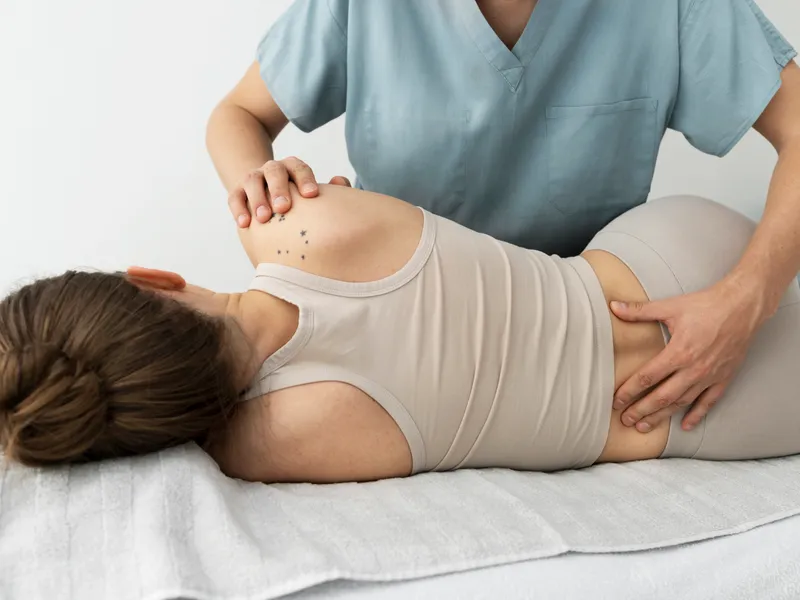
Our approach
How we treat bursitis in Tomball
- Step 1
Thorough exam
We assess your movement, joint mobility, and muscle balance to find the mechanical fault stressing the bursa — and refer for imaging only when it will change your care plan.
- Step 2
A clear, personalized plan
You leave with a plain-English explanation of what we found and a specific, time-bound care plan focused on offloading the irritated bursa and correcting the pattern driving it.
- Step 3
Gentle treatment & rehab
We combine chiropractic adjustments, targeted soft-tissue work, and progressive corrective exercise to calm the inflammation and rebuild the strength and mechanics that protect the joint long term.
The basics
Understanding bursitis
Bursae are tiny, fluid-filled cushions positioned at key friction points around your joints — between tendons, bones, and muscles. When repeated stress or poor movement mechanics overloads a bursa, the sac swells and becomes inflamed, producing the deep, achy pain that's the hallmark of bursitis. The most commonly affected sites are the outer hip (trochanteric bursitis), the shoulder, the knee (prepatellar or pes anserine bursitis), and the elbow. In many cases, the inflammation isn't the root problem — it's the signal that a joint isn't moving correctly, forcing surrounding structures to compensate.
That's why simply resting or getting a cortisone injection often provides only temporary relief. The bursa settles down, but the movement fault that stressed it remains — and the pain returns. Conservative chiropractic care takes a different approach: reduce the load on the inflamed bursa now, then identify and correct the mechanical cause so the bursitis doesn't come back.


New Patient Special
Your first visit for just $57
We are running a new patient special for $57 on your first appointment! No promo code is needed to take advantage, just need to schedule!
New Patient Special is not valid on weekend appointments, full appointment rate applies
Types of bursitis we treat
Bursitis can develop in any joint that’s repeatedly loaded or stressed, but a few sites are especially common. We help Tomball-area patients with:
- Hip bursitis (trochanteric bursitis) — pain over the outer hip or buttock, often worse when lying on that side or walking on hard surfaces. Usually driven by hip-muscle imbalances or a leg-length difference. Related to our hip pain page.
- Shoulder bursitis — a deep ache under or around the shoulder that flares with overhead reaching. Often linked to rotator-cuff weakness or poor shoulder mechanics. See our shoulder pain page.
- Knee bursitis — pain over the front of the knee (prepatellar) or the inner knee (pes anserine), often from kneeling, stair-climbing, or faulty gait. Connected to the broader picture on our knee pain page.
- Elbow bursitis (olecranon bursitis) — swelling and aching over the back of the elbow, typically from repetitive pressure or impact.
- Bursitis alongside arthritis — inflamed bursae often develop secondary to underlying joint degeneration. We address both layers together. See our arthritis page.
Your exam tells us exactly which structure is involved and what’s driving it — so your plan targets the cause, not just the symptom.
When to see a chiropractor in Tomball
Many people assume bursitis just needs rest, but the mechanics driving the inflammation often persist without active care. Consider booking an exam if you notice:
- Joint pain that worsens with specific movements, overhead reaching, or climbing stairs
- Deep aching over the outer hip, shoulder tip, or knee that flares with lying on that side
- Swelling, warmth, or tenderness directly over a joint
- Pain that has lingered more than a week or two despite rest
- Bursitis that keeps returning after short-term relief from medication or injections
- Reduced range of motion or strength in the affected joint
What to expect at your first visit
Your first appointment is focused on understanding your joint mechanics before we treat you. Here’s how it goes:
- Listen to your story — when the pain started, which activities provoke it, and how it’s affecting your work, sleep, or activity.
- Examine thoroughly — orthopedic testing, joint mobility assessment, and movement analysis to pinpoint the mechanical cause of the bursitis. We order imaging only when it will change your care.
- Explain what we found — in plain English, with a specific, time-bound care plan and realistic expectations for recovery.
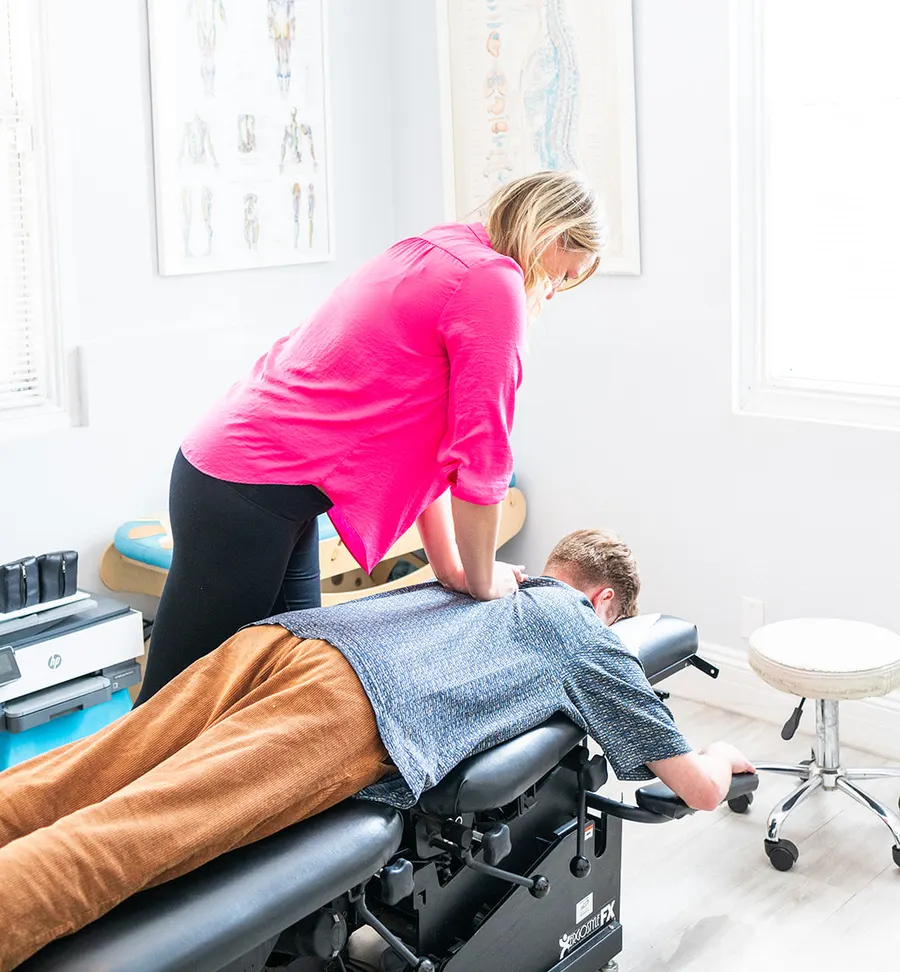
- Start care when appropriate — if your exam shows chiropractic care is a good fit, gentle adjustments or soft-tissue work can begin at that first visit, along with instructions on activity modification to reduce the load on the irritated bursa.
You’re never locked into open-ended treatment — just a clear plan with a real finish line.
Drug-free bursitis relief — without medication or surgery
Anti-inflammatories and cortisone injections can quiet bursitis pain for a few weeks, but they don’t correct the joint mechanics or muscle imbalances that caused the inflammation in the first place — so the bursa becomes irritated again. Surgery to remove the bursa is rarely necessary and still doesn’t fix the underlying movement fault. Chiropractic care offers a different path: relieve the load on the inflamed bursa now, then correct the mechanics and build the strength that prevents recurrence — without drugs or downtime. For many people in Tomball, Magnolia, Cypress, and Spring, that can mean a return to walking, working, and activity without constantly guarding the joint. And if your exam ever suggests you need imaging or specialist referral, we’ll tell you honestly and help coordinate that care.
Why Tomball-area patients choose Bluebonnet Chiropractic
Whether you’re coming from Tomball, Magnolia, Cypress, The Woodlands, or Spring, you’ll find that at Bluebonnet Chiropractic we look past the inflamed bursa to find why it became inflamed — and we give you a clear plan to fix it. Dr. Elizabeth Kincaid combines gentle chiropractic adjustments, targeted soft-tissue work, and corrective exercise and sports injury rehab into one coordinated plan. Whether your bursitis is in the hip, shoulder, or knee — or has been recurring despite previous treatment — we build a plan specific to your mechanics and goals.
Ready to get started? Our New Patient Special makes your first visit easy, and you can request an appointment online or by phone.
Why choose chiropractic
Chiropractic care vs. the typical bursitis routine
| Comparison factor | Chiropractic Care | Pain Meds & Surgery |
|---|---|---|
| Addresses the root cause | ✓Corrects joint mechanics | ✕Masks the symptoms |
| Drug-free & non-invasive | ✓Always | ✕Rarely |
| Risk of side effects | ✓Minimal | ✕Higher (meds, injections, surgery) |
| Personalized to you | ✓Custom care plan | ✕One-size-fits-all |
| Builds long-term joint stability | ✓Rehab included | ✕Seldom addressed |
| Typical recovery | ✓Active & gradual | ✕Often recurring |
Treatment options
Services we use to relieve bursitis
Chiropractic Care
Gentle, precise chiropractic adjustments in Tomball, TX that restore motion to restricted joints and relieve back pain, neck pain, and headaches at the source.
Learn more →Myofascial Release
Myofascial release in Tomball, TX — slow, sustained pressure that frees the connective tissue to ease chronic tightness, restore movement, and relieve stubborn pain.
Learn more →Ultrasound Therapy
Ultrasound therapy in Tomball uses safe sound waves to deliver soothing deep heat to soft tissue — easing inflammation and speeding recovery from strains and sprains.
Learn more →Related conditions
Other conditions we treat in Tomball
Patient reviews
What our patients say
What causes bursitis?+
Bursitis is usually caused by repetitive overuse of a joint or faulty movement mechanics that force the bursa to absorb excess friction and load. Common culprits include repetitive reaching overhead (shoulder), prolonged kneeling or stair-climbing (knee), and hip-muscle imbalances or leg-length differences (hip). Trauma, prolonged pressure, and underlying joint inflammation like arthritis can also trigger it.
Can a chiropractor help bursitis?+
Yes. Chiropractic care is well-suited to bursitis because we address the joint mechanics and muscle imbalances driving the inflammation — not just the inflamed bursa itself. Adjustments restore proper joint motion, soft-tissue work releases tight muscles that overload the bursa, and corrective exercise rebuilds the strength and patterns that keep the joint moving correctly.
How many visits will I need for bursitis relief?+
It depends on how long you've had the pain, which joint is affected, and the underlying cause. After your exam, Dr. Kincaid provides a specific, time-bound care plan with a clear endpoint — not open-ended treatment.
Is bursitis the same as tendinitis?+
They're different but often appear together. Bursitis is inflammation of the bursa sac; tendinitis is inflammation of a tendon. Both are typically overuse injuries driven by poor mechanics, and both respond well to the same conservative care approach — fix the movement fault and both structures get a chance to heal.
Should I rest completely when I have bursitis?+
Complete rest is rarely the best answer. Prolonged rest allows muscles to weaken further and can slow recovery. The goal is to reduce the load on the irritated bursa while staying as active as your pain allows, using targeted exercise to correct the mechanics driving the problem.
Will my insurance cover bursitis treatment?+
Coverage for chiropractic care varies from plan to plan. If you have questions about insurance or payment, just ask when you request your appointment and we'll talk it through with you before your first visit so there are no surprises.
Is chiropractic care safe for hip bursitis (trochanteric bursitis)?+
Yes. We screen every patient thoroughly on the first visit. Adjustments are gentle and targeted, and we work within a range of motion that doesn't aggravate the inflamed bursa while we address the mechanical causes driving the irritation.
Do I need a referral or imaging before my first visit?+
You don't need a referral to schedule an exam with us. Many cases of bursitis don't require imaging before care begins — we screen for red flags at your first exam and use imaging only when it will change your treatment plan.
How is hip bursitis different from hip arthritis?+
Hip bursitis pain is typically felt over the outer hip or buttock and worsens with lying on that side or climbing stairs. Hip arthritis pain is usually felt deeper in the groin and worsens with weight-bearing and rotation. Both can coexist, and both respond to conservative joint care — though your exam will clarify which is dominant.
Can bursitis come back after treatment?+
It can if the underlying mechanics aren't corrected. That's why our care plan includes progressive rehab — not just pain relief. We rebuild the strength and movement patterns that protect the bursa so the problem doesn't return once your symptoms are gone.